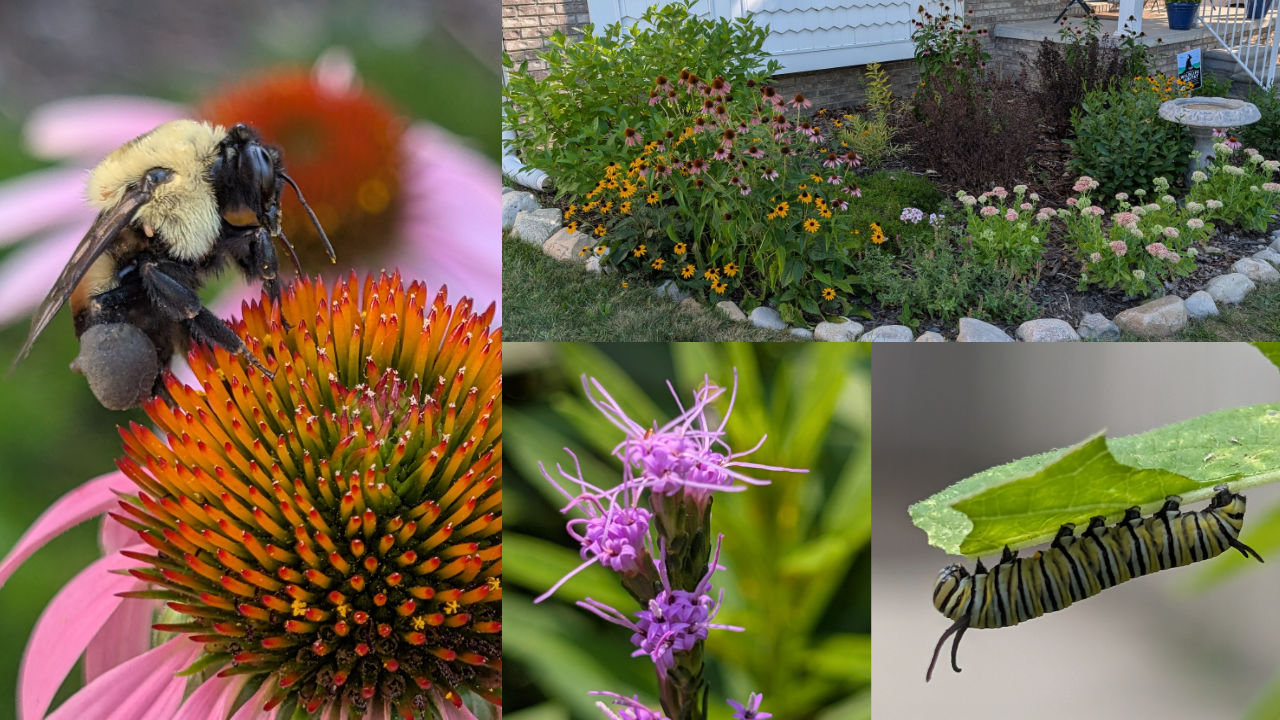
2025 is over, we’re deep in the winter, and I’m missing my garden. What better time to review what happened this year and reminesce about back when things weren’t gray, cold, and dead?
Native Plants
I’m very passionate about native plants and insects. In my opinion, landscaping with native plants is one of the easiest ways for an individual to make a noticeable positive impact on the environment. Getting to see beneficial insects and birds using the things you planted for them is so incredibly satisfying, and it makes me feel so much more connected to nature than I ever have before. As an extra bonus, native plants are adapted to living in your climate on their own, so they require much less maintenance once they’re established!
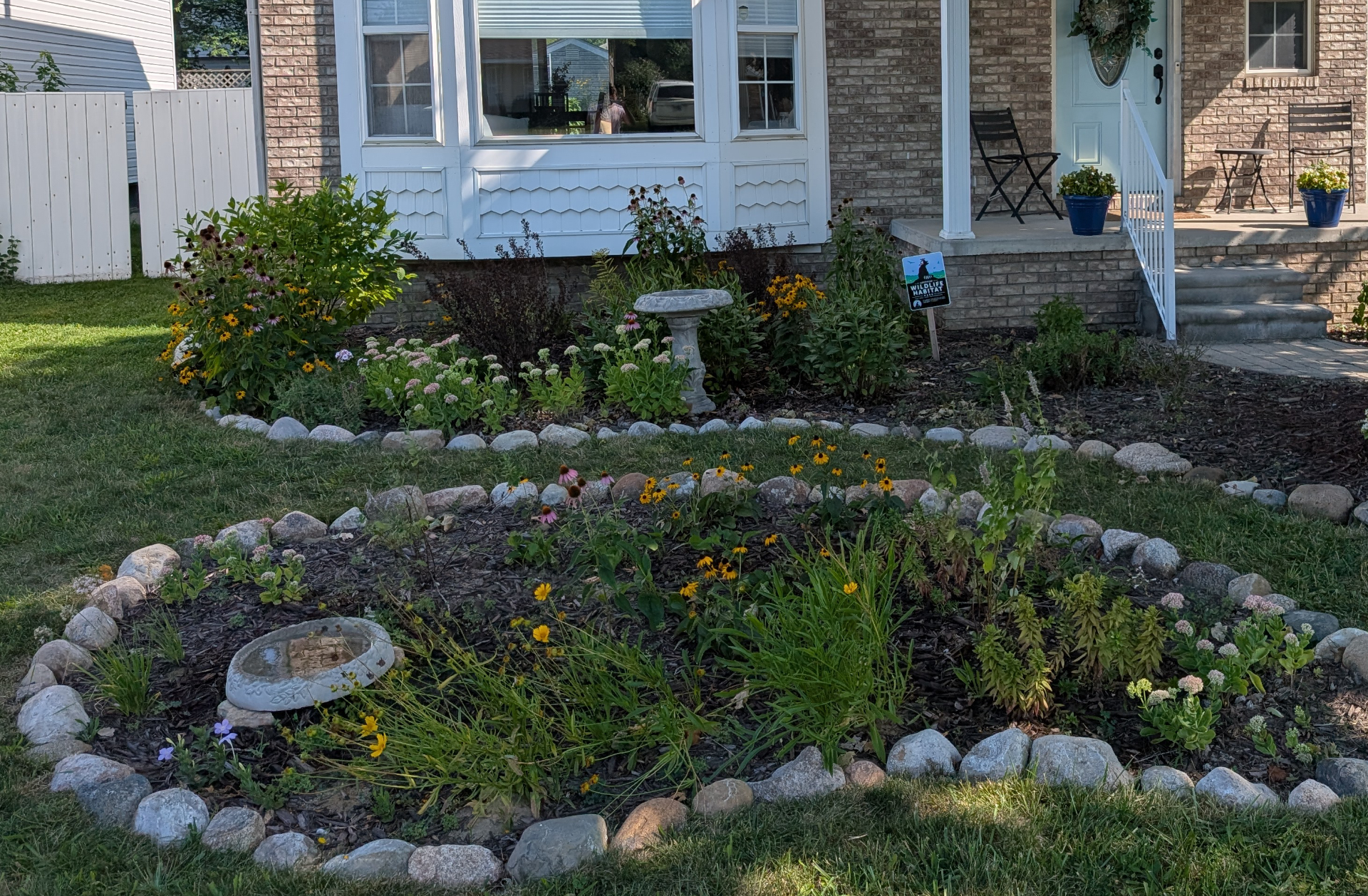
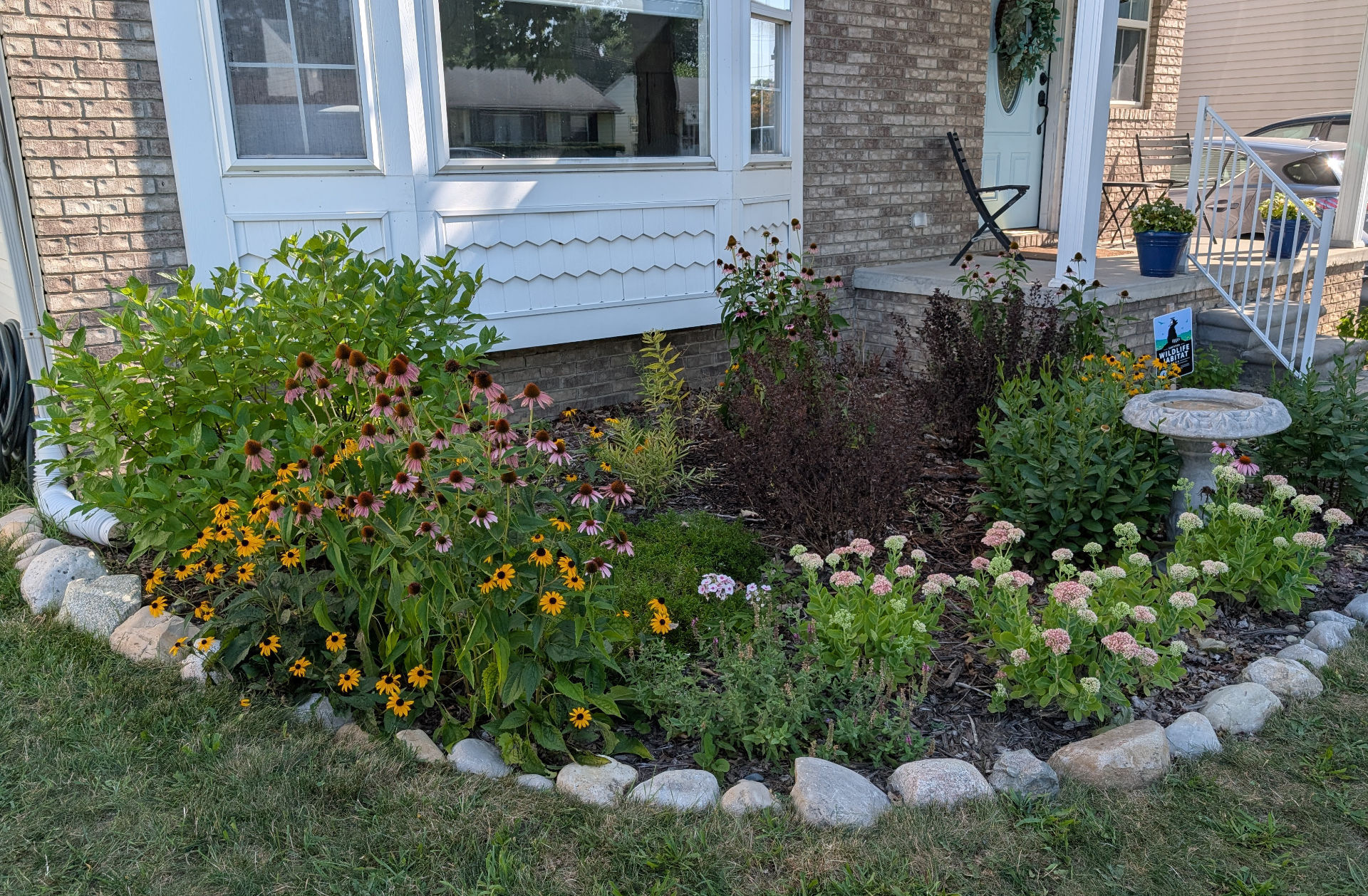
This was the second full growing season since I ripped up a bunch of our yard in the fall of 2023 and started the garden in earnest.
There were some disappointments; a couple things I planted in the previous year didn’t work out or struggled a lot more than I expected, including some plants that I was really excited about. But failure is part of the journey, and I’m learning a lot about what plants will work where depending on their needs.
With that said, I think things are still going great and this was overall a very successful year.
What I planted this year
I was a little out of control this year.
My parents got me a gift certificate for the Wildtype plant nursery near where I grew up so I took a trip out there this spring and loaded up. It was an awesome experience! If you’re located in Mid-Michigan and looking for native plants, you can’t do better than Wildtype.
Most of the plants listed here came from Wildtype, but I couldn’t help but keep adding more to my collection from other nuseries here and there as the year went on. So here is the full list, minus a couple things I know I bought but apparently didn’t keep records of and I have no idea what they were now. Guess that’ll be a fun surprise next year!
- New Jersey Tea
- Wild Strawberry
- Common Violet
- Little Bluestem
- Golden Ragwort
- Blue Vervain
- Showy Goldenrod
- Joe Pye Weed
- Mountain Mint
- Turtlehead
- Northern Blazing Star
- Dense Blazing Star
- Dwarf Blazing Star
- Wild Hyacinth
- Anise Hyssop
- Swamp Milkweed
- Butterfly Weed
- Wild Columbine
already had some, but added more
We ripped up two invasive Burning Bushes to replace with New Jersey Tea, I’m excited about that upgrade.
You may also notice that I went on quite a Blazing Star kick, getting 3 different varieties. A house in our neighborhood has an incredible yard full of native plants and every fall I see their Blazing Stars absolutely dripping with Monarch Butterflies and it fills me with envy, so I’m trying to copy them.
I planted a majority of these plants in the spring, and for the most part they did great! Some plants can be a little boring in their first year, especially if you planted them in the spring instead of the previous fall, but at least most of these stayed fairly happy and healthy. I’m excited to see what they do next year.
Bugs
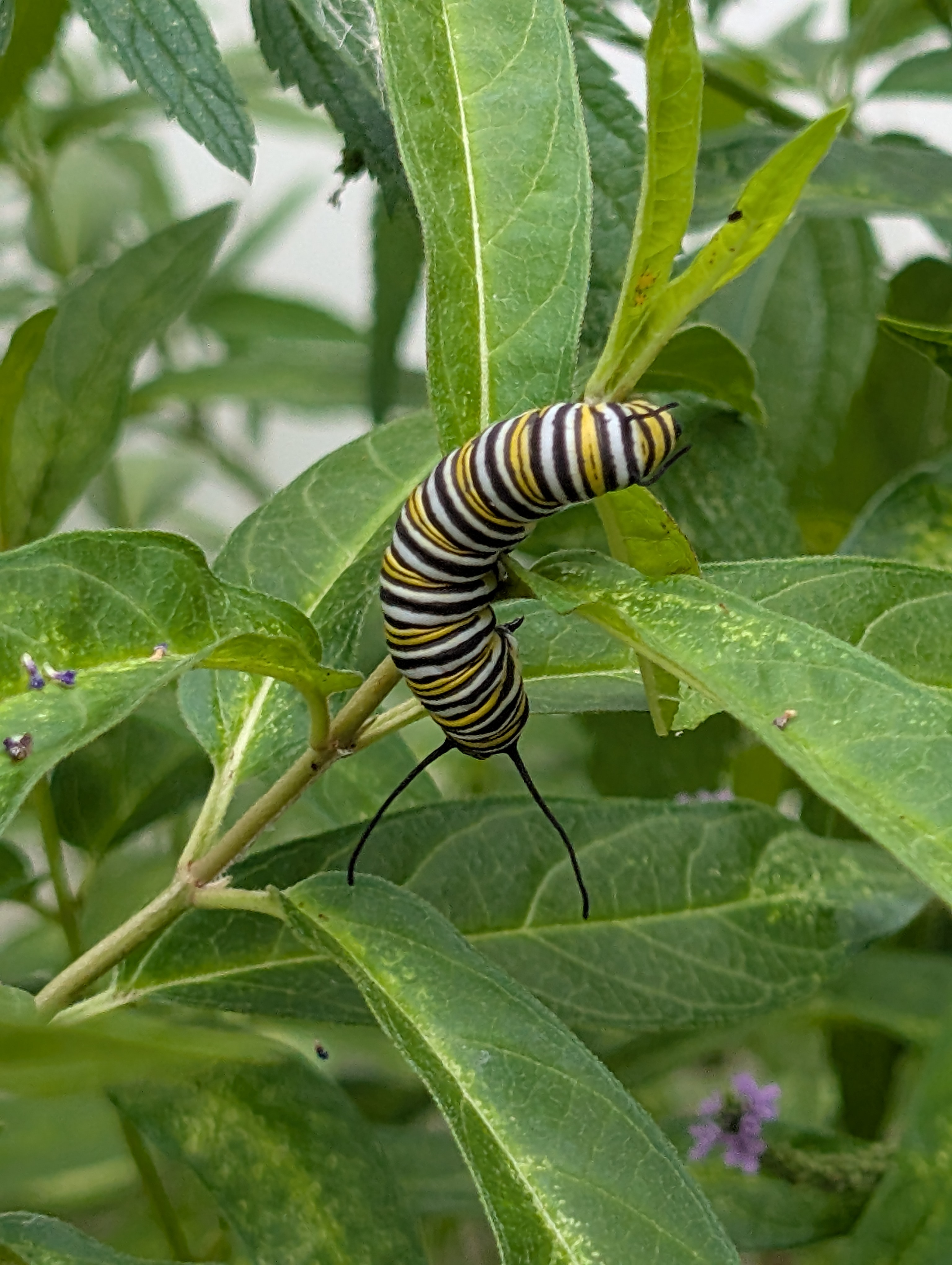
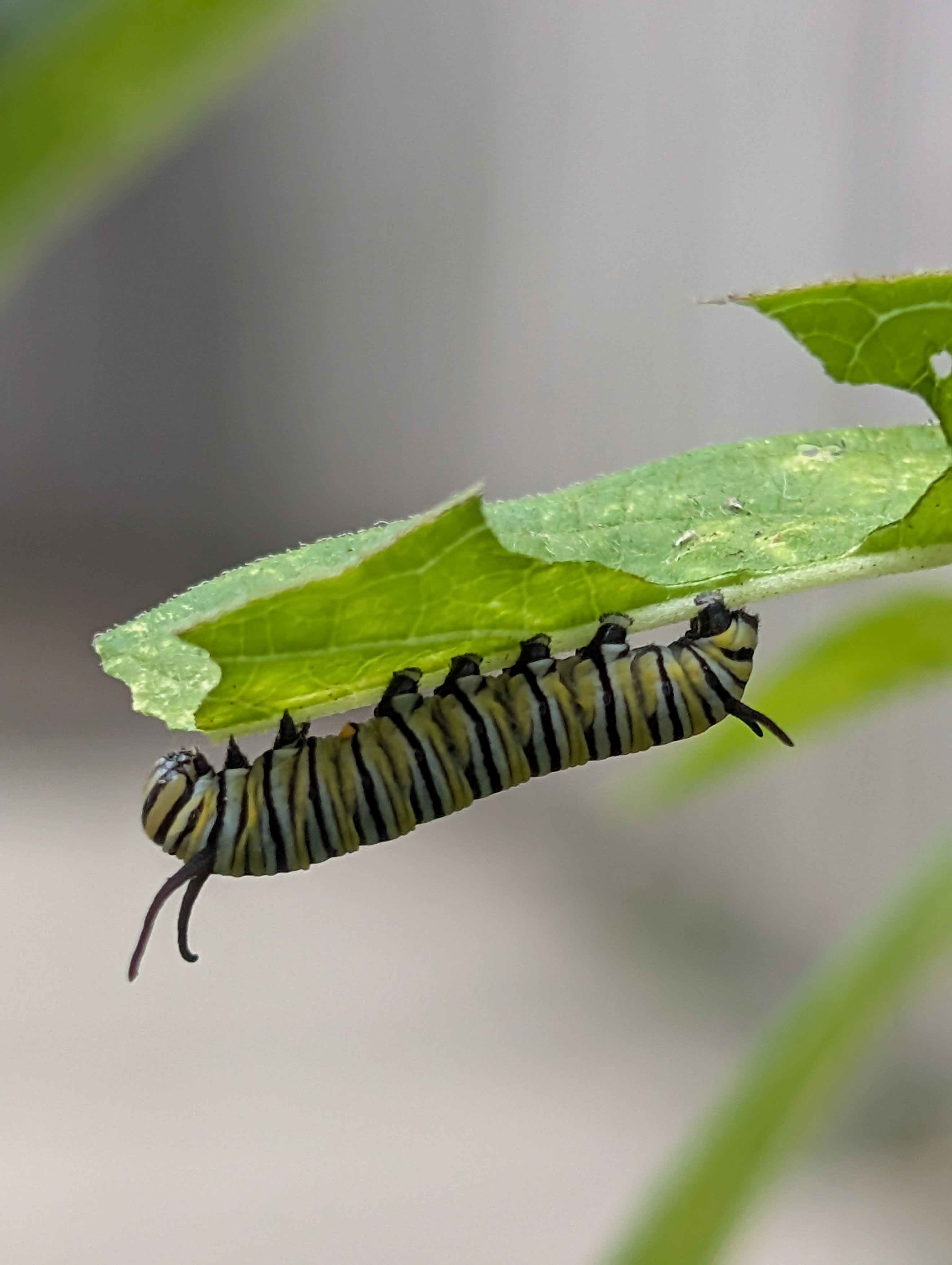
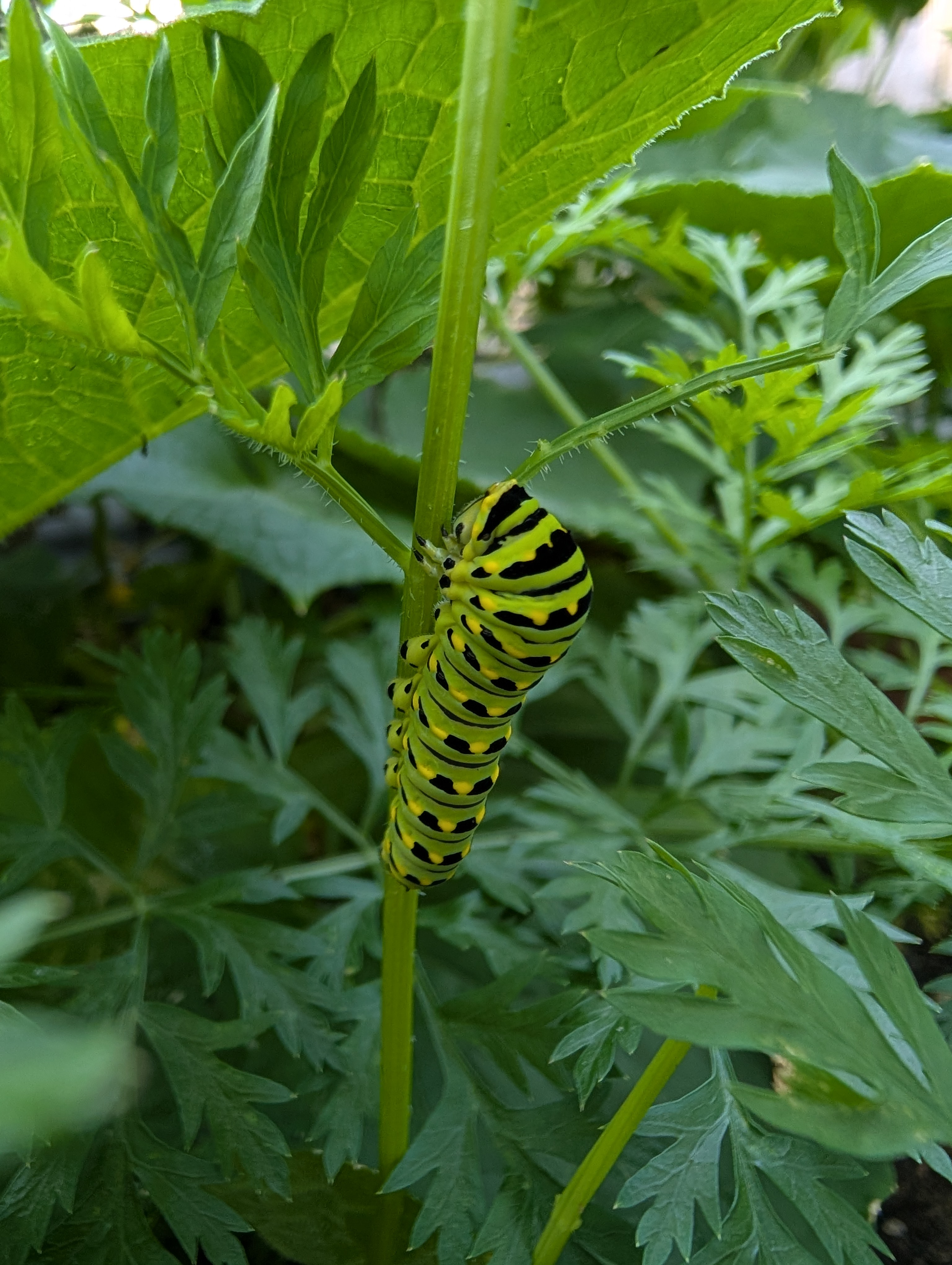
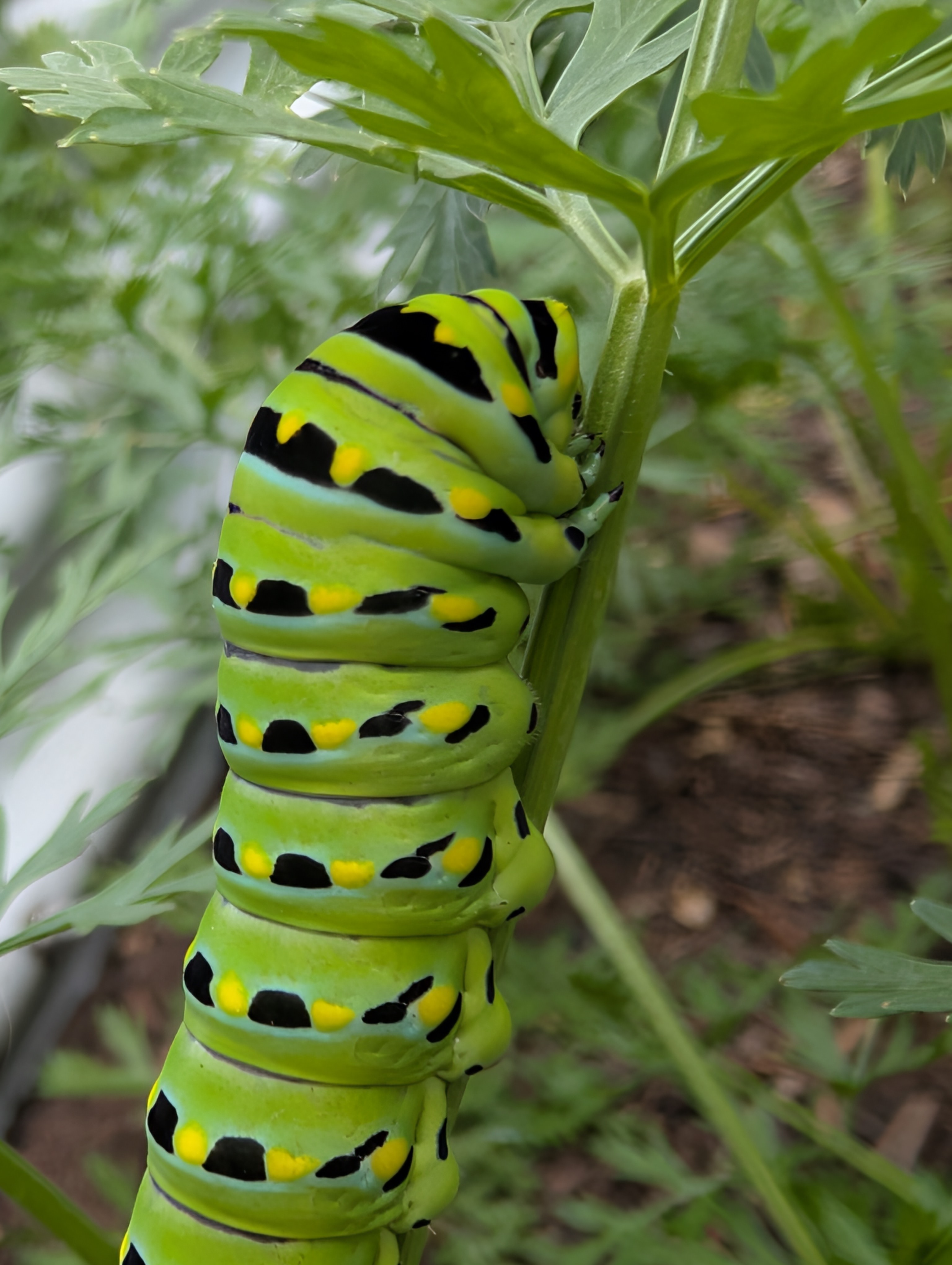
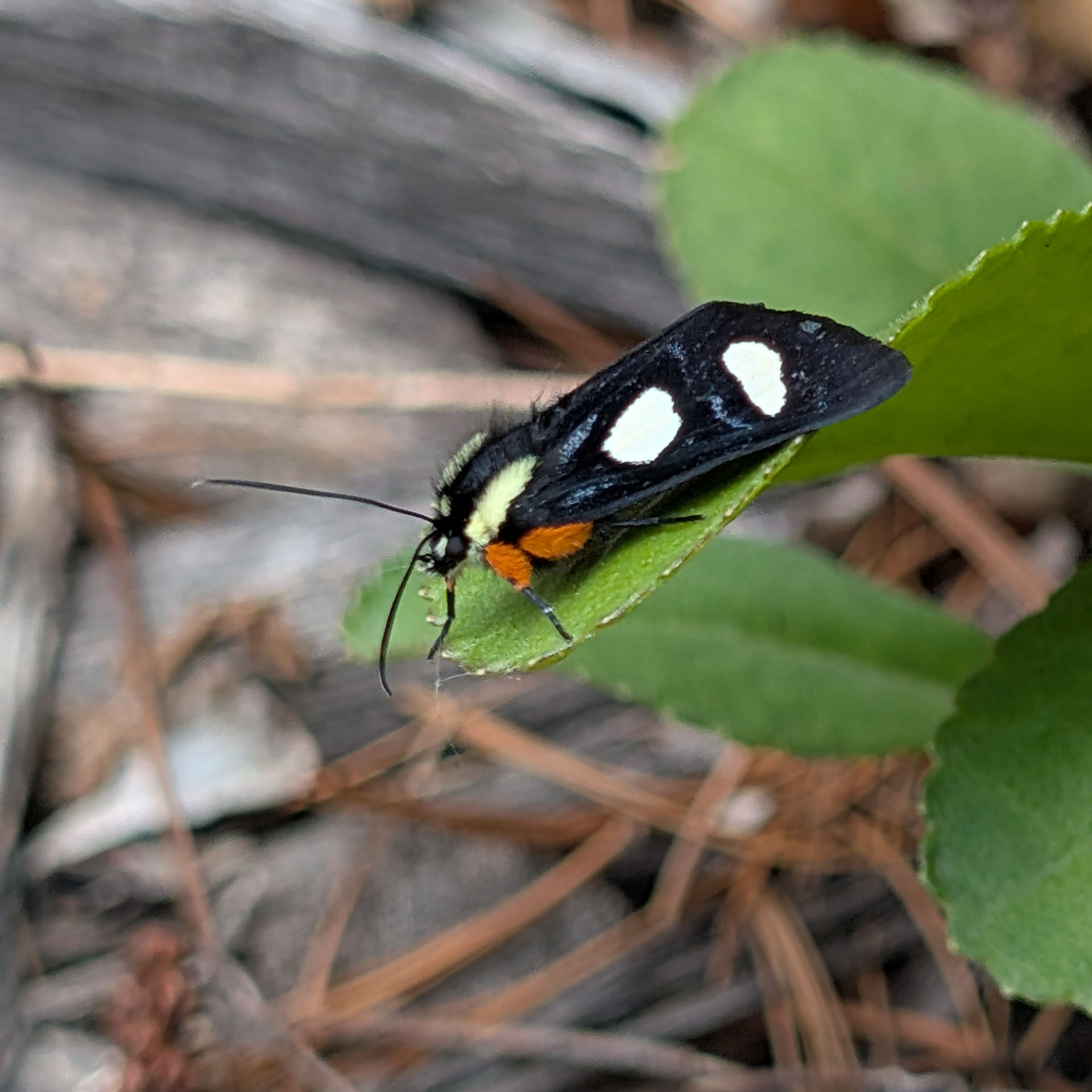
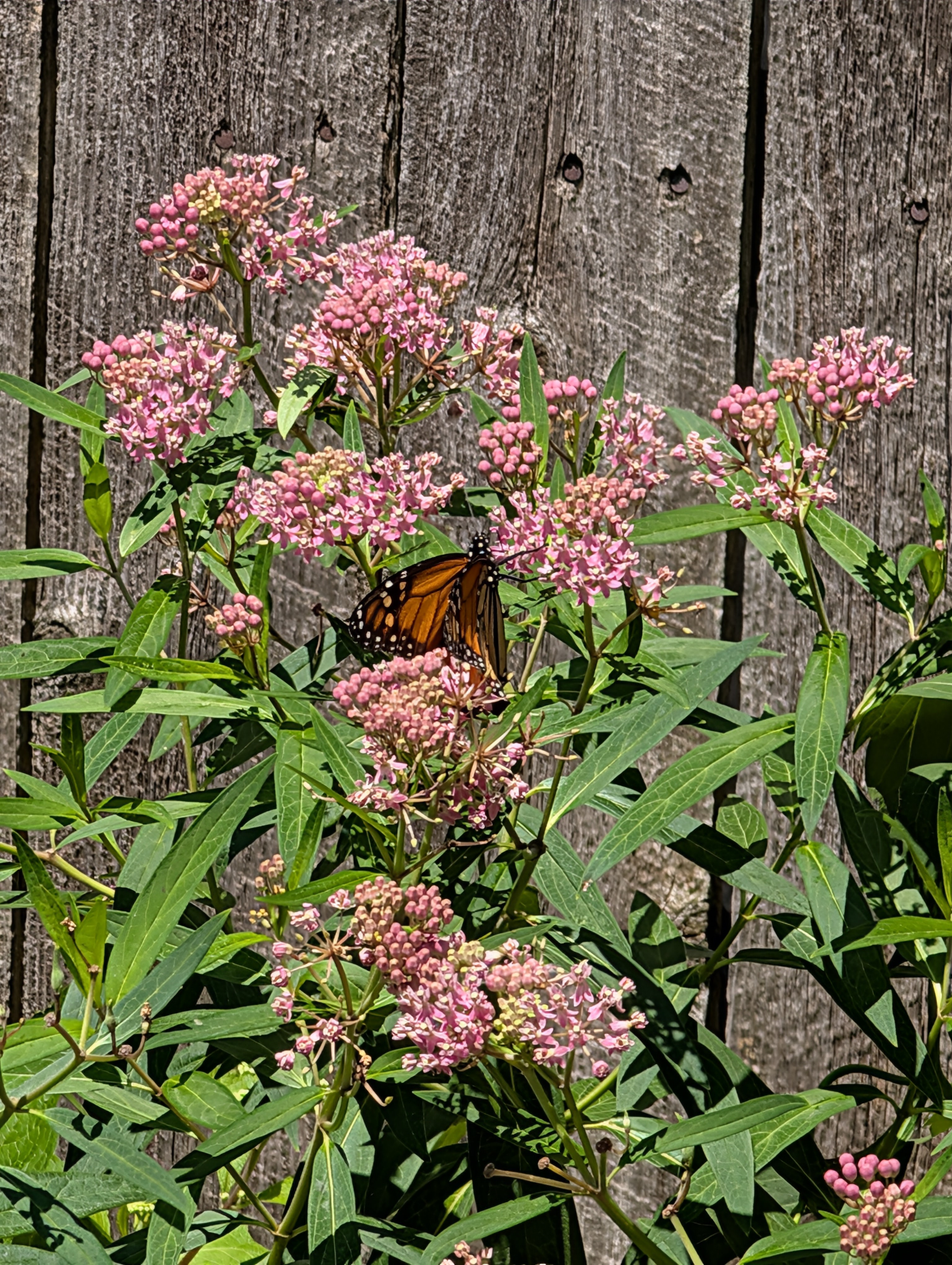
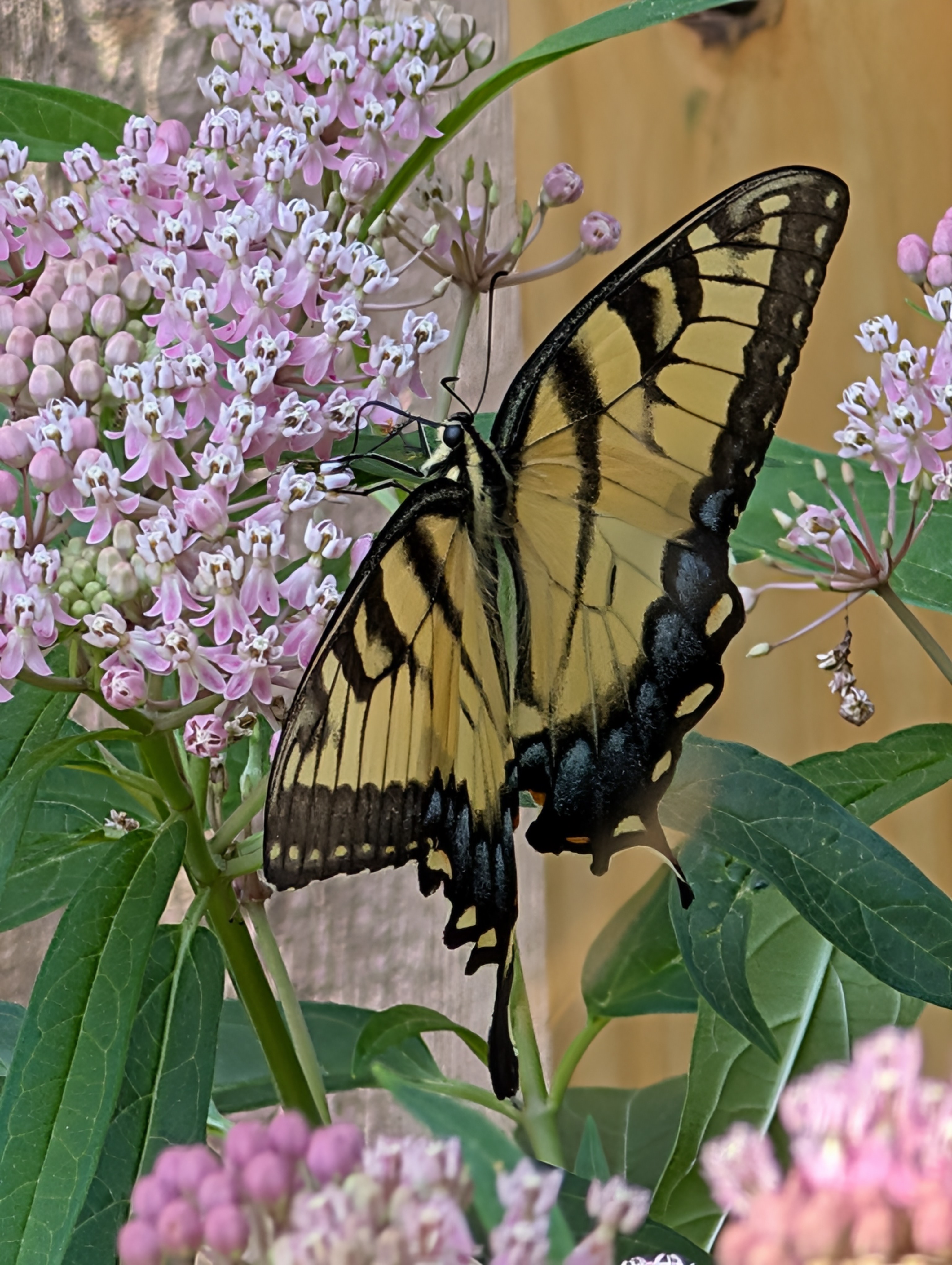
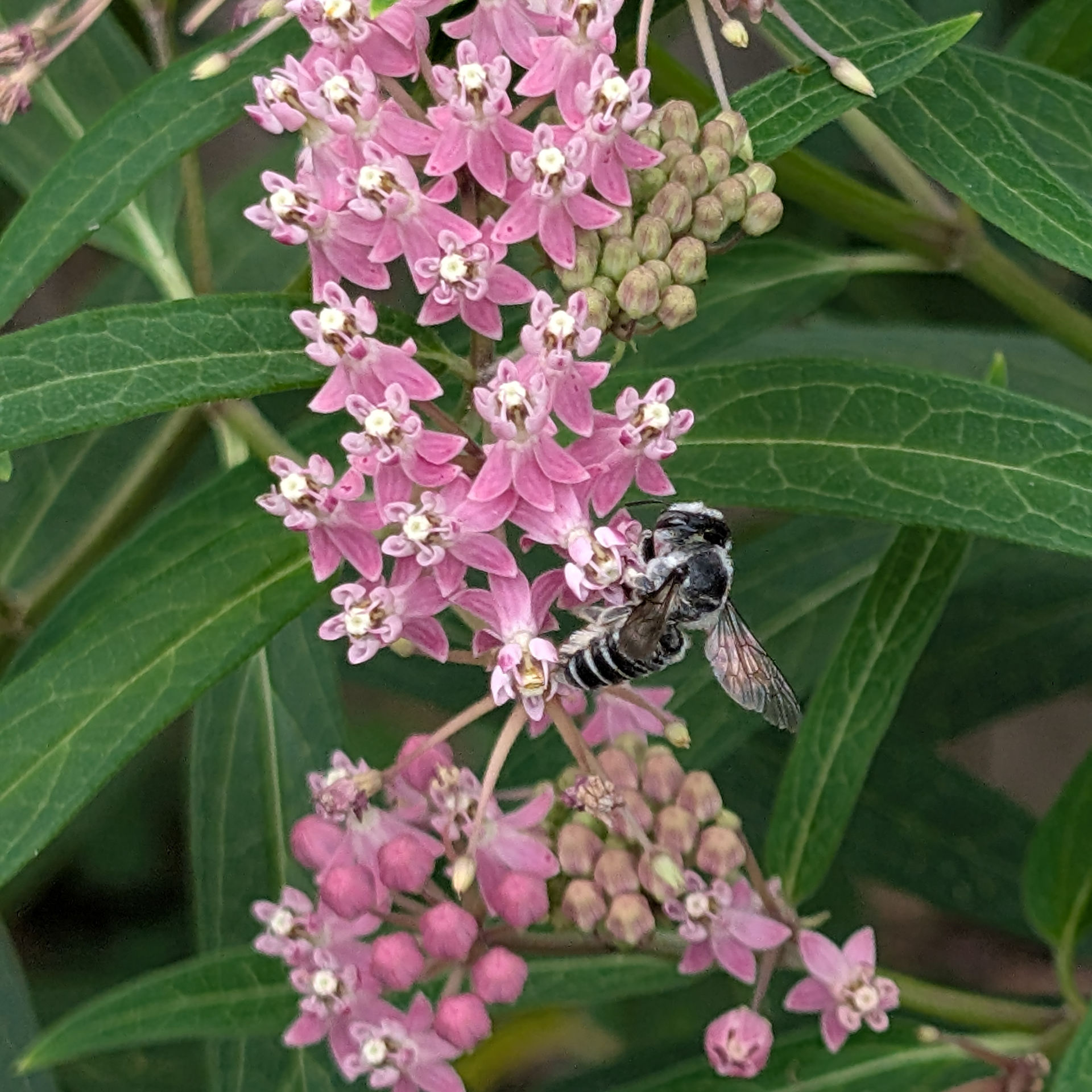
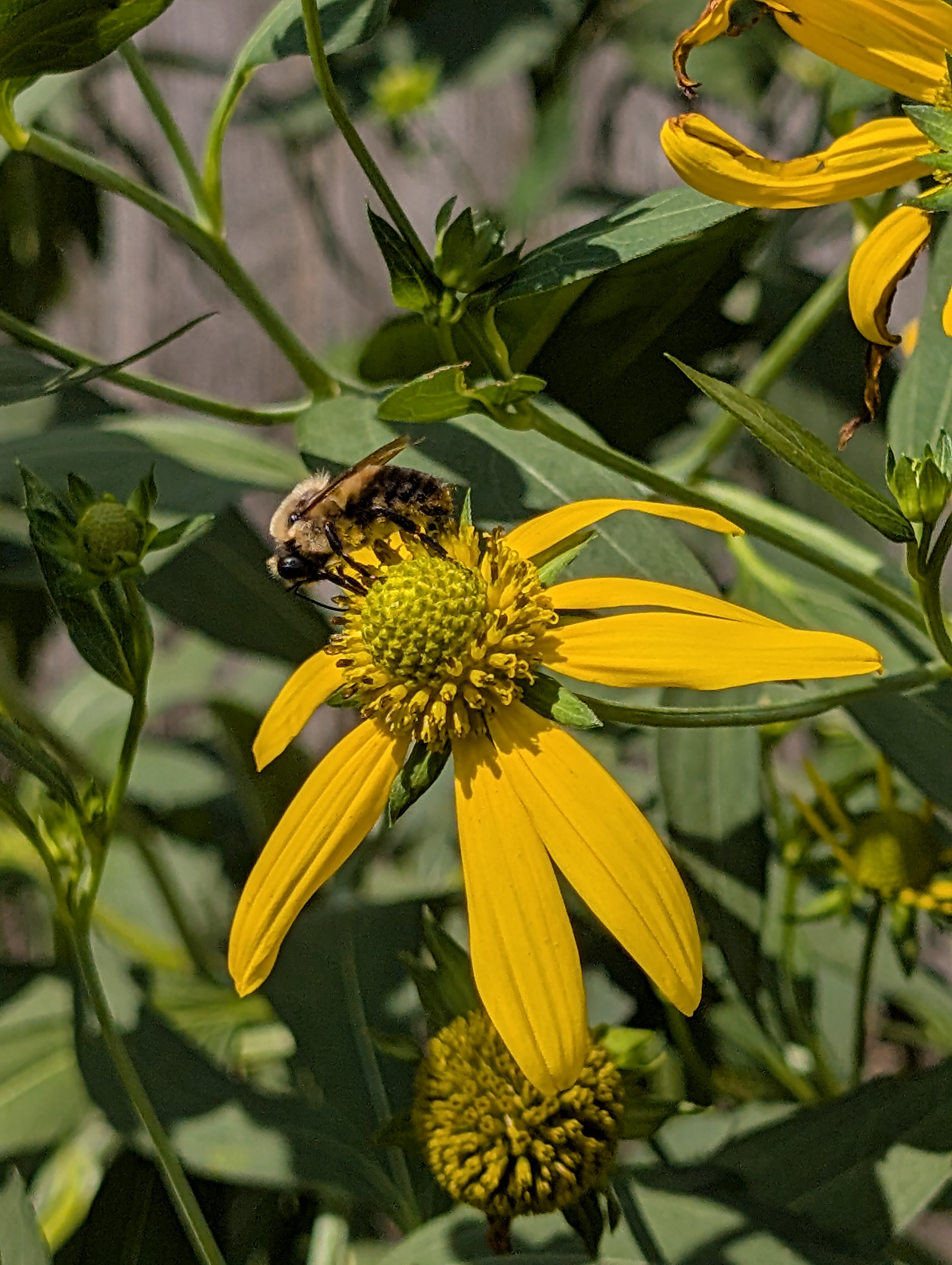
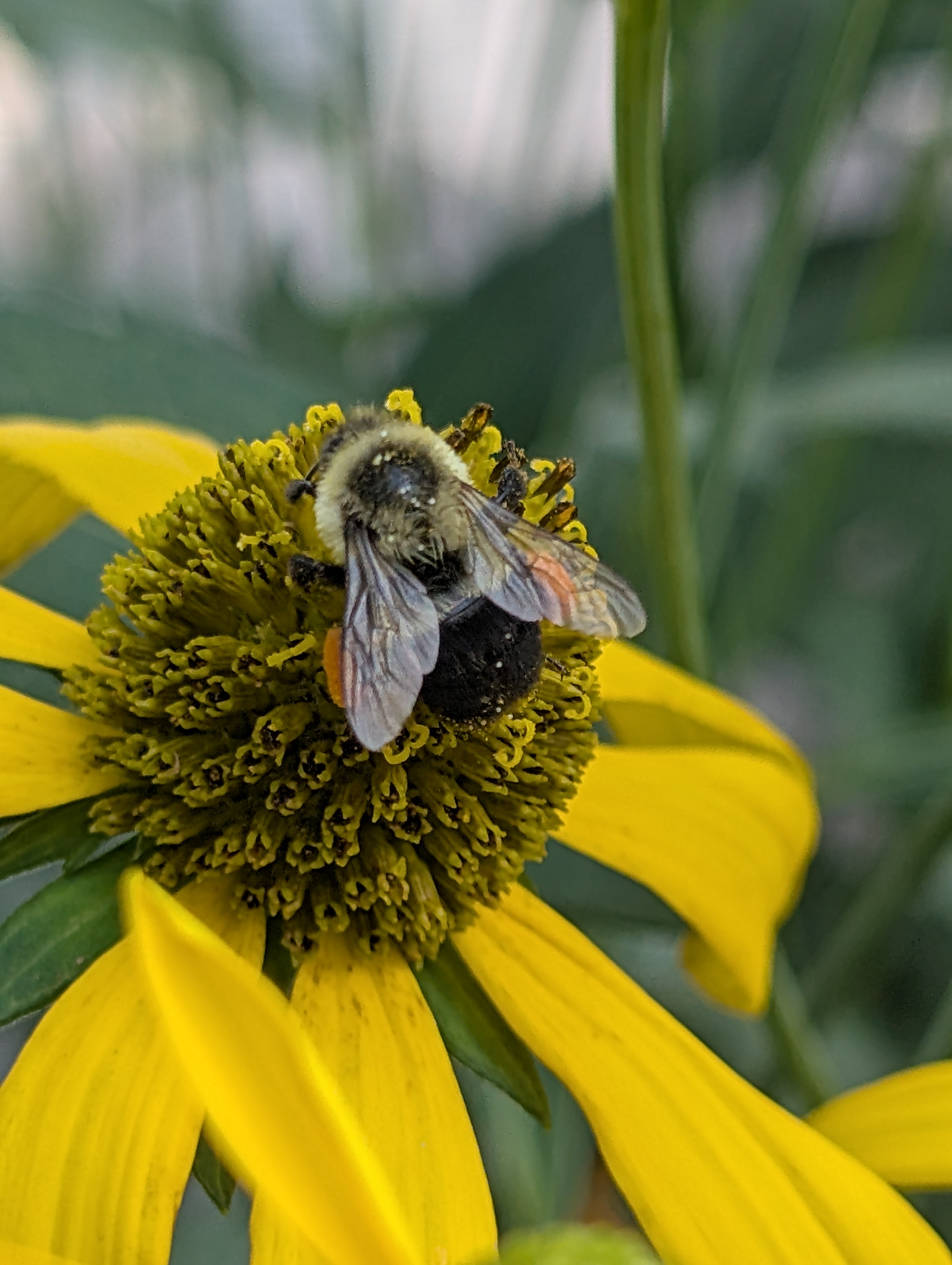
The best part of native plant gardening is all the cool bugs that they attract! This was a great year for that. Here’s some of my favorite photos I got, all taken on my phone for better or worse. I tried my best to identify them correctly but may have gotten some wrong because I’m not even close to an expert!

Rain Barrels!
We’ve been dealing with annoying drainage issues since we got this house because the previous owners decided to pave so much usable yard space around our garage that when it rains, the water only has a few limited places to drain which causes the ground in those spots to basically become a completely saturated swamp.
I learned that our county has a program where you can apply for rebates for taking actions to improve drainage and reduce water usage, including installing rain barrels, so I went for it! It was a great easy process and we were approved for 2 rain barrels. Between getting all of the pieces to connect the barrels to our downspouts and the materials for building a simple wooden stand for one of the barrels, I ended up spending a bit beyond the maximum rebate amount, but we still got a really nice setup for something like 80% off!
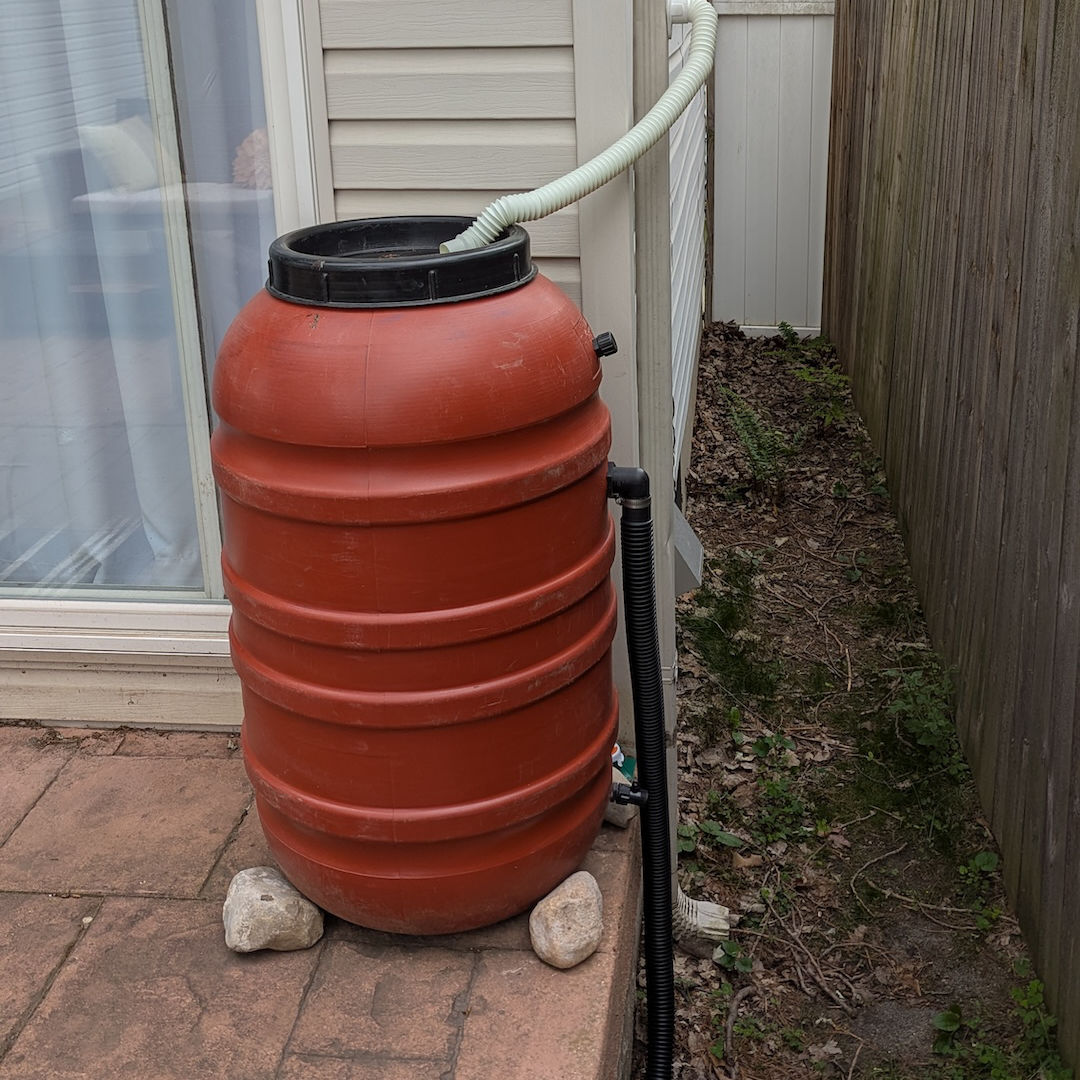
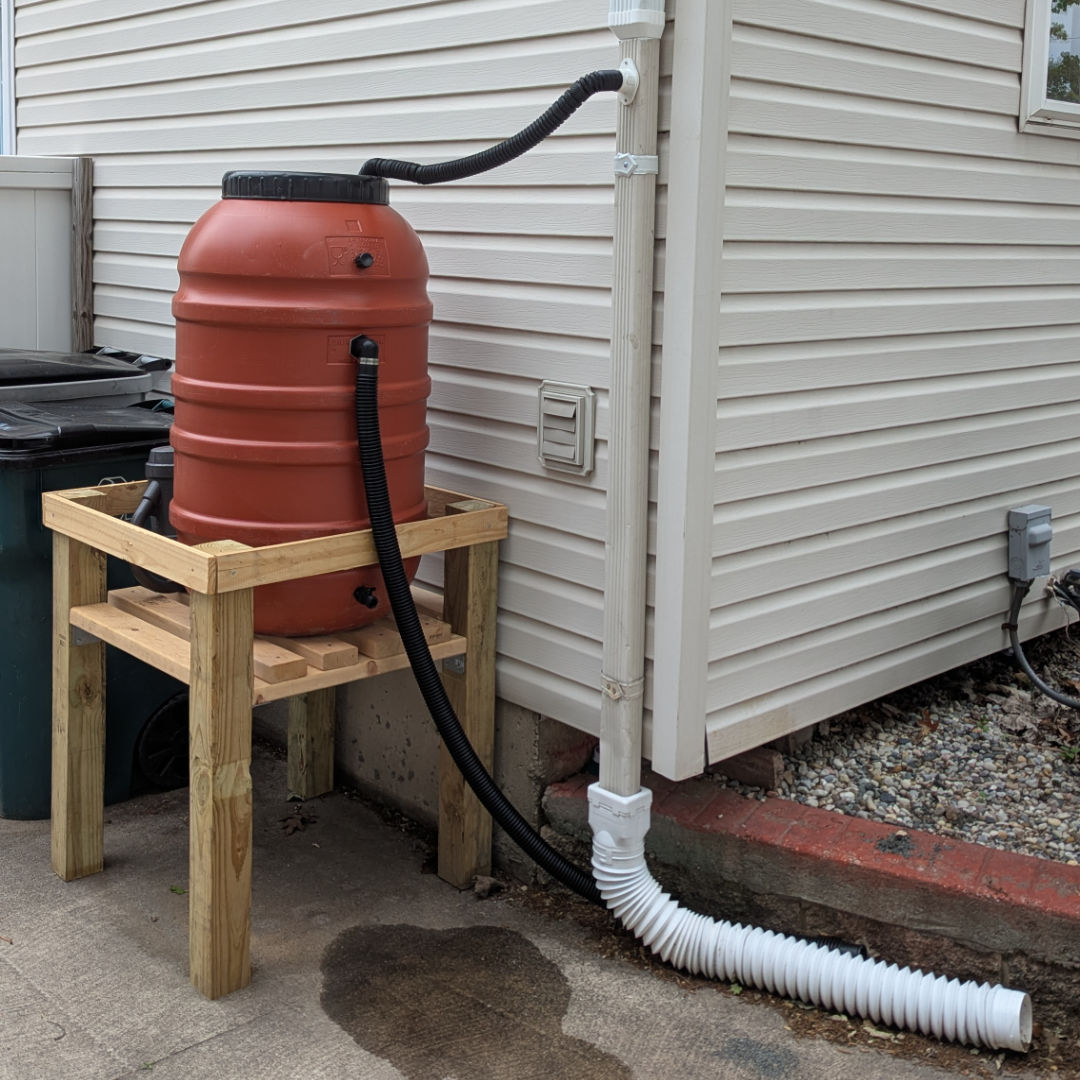
Between installing these barrels and planting a bunch of water-loving native plants in one of the particularly swampy corners of our property, our drainage issues seem to have been almost completely resolved. Along with the drainage improvements, they were able to serve as a very reliable source of free water for my gardens! It’s pretty astonishing to see how quickly these barrels can fill with even a relatively small amount of rain, and that rain goes much further than you might think. I barely had to use a garden hose to water anything all summer, which felt like a huge win.
Vegetables
I focus a lot of my energy on native plants, but I do grow some vegetables too! The last couple years, my attempts at growing vegetables went fine, but I kept making the mistake of growing things which seem neat, but weren’t practical at all because we don’t actually care to eat them that much.
So this year, I tried to shift my focus to things I knew we would use: cucumbers, tomatoes, and carrots.
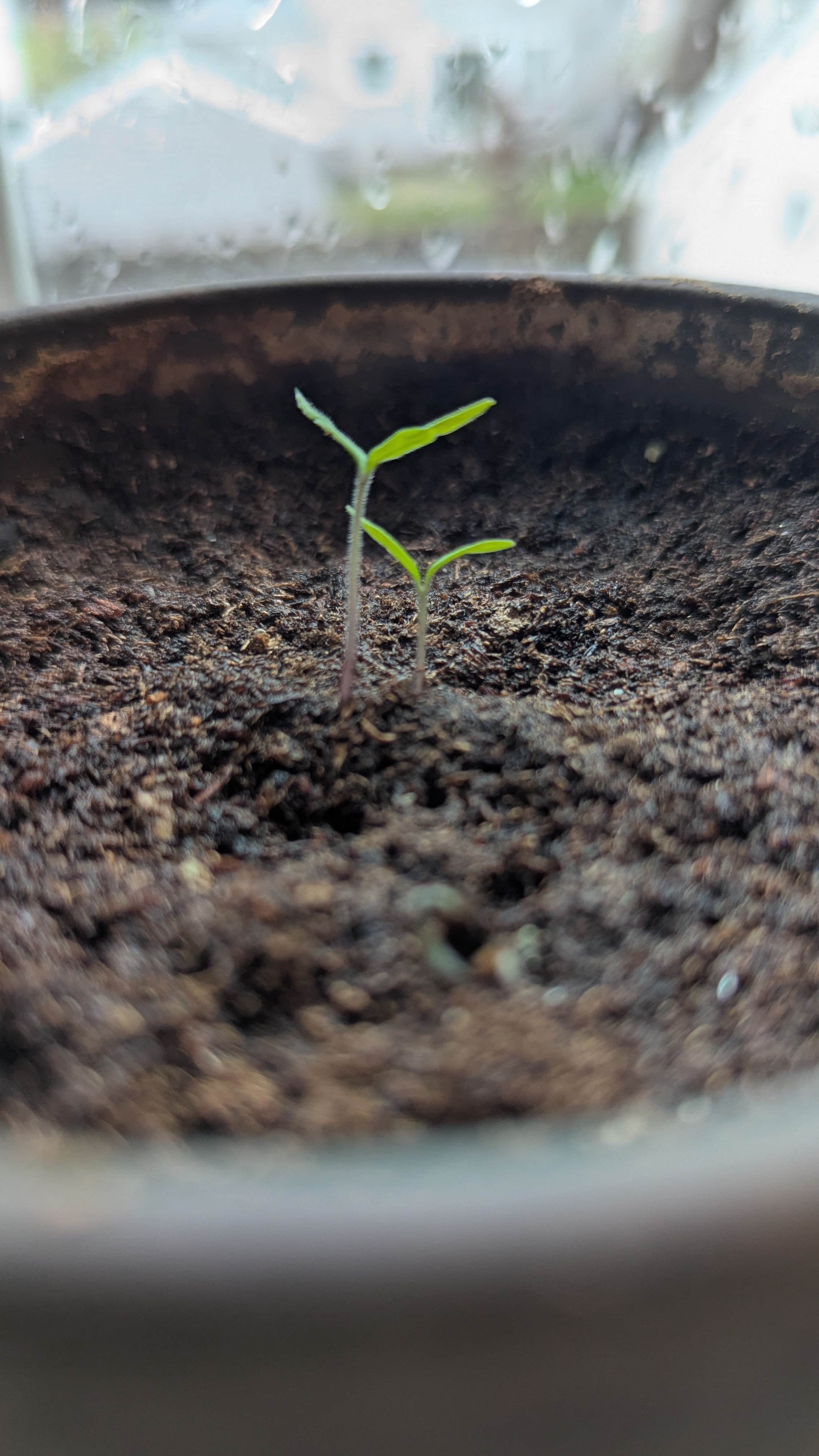
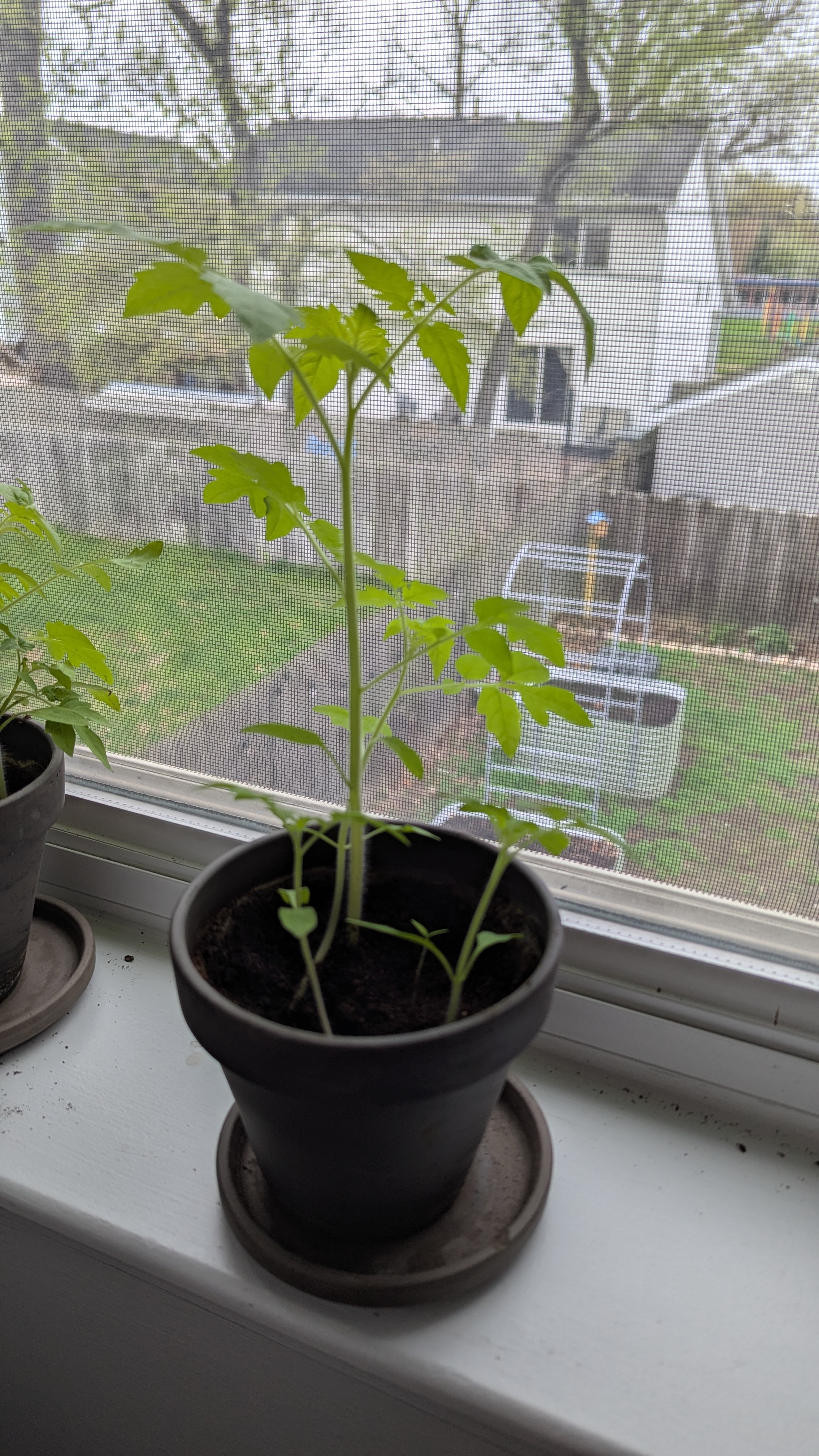
I learned that tomatoes are pretty sensitive to cold, so in cold climates like Michigan, if you want to maximize their growing season you have to start them early indoors until it’s consistently warm enough for them to go outside. I had tomato seeds I harvested last year from tomato plants that my partner’s uncle had given us, so I just planted those in pots in early April and let them grow on my office window sill. I couldn’t believe how many of the seeds germinated, this went better than I could have dreamed.
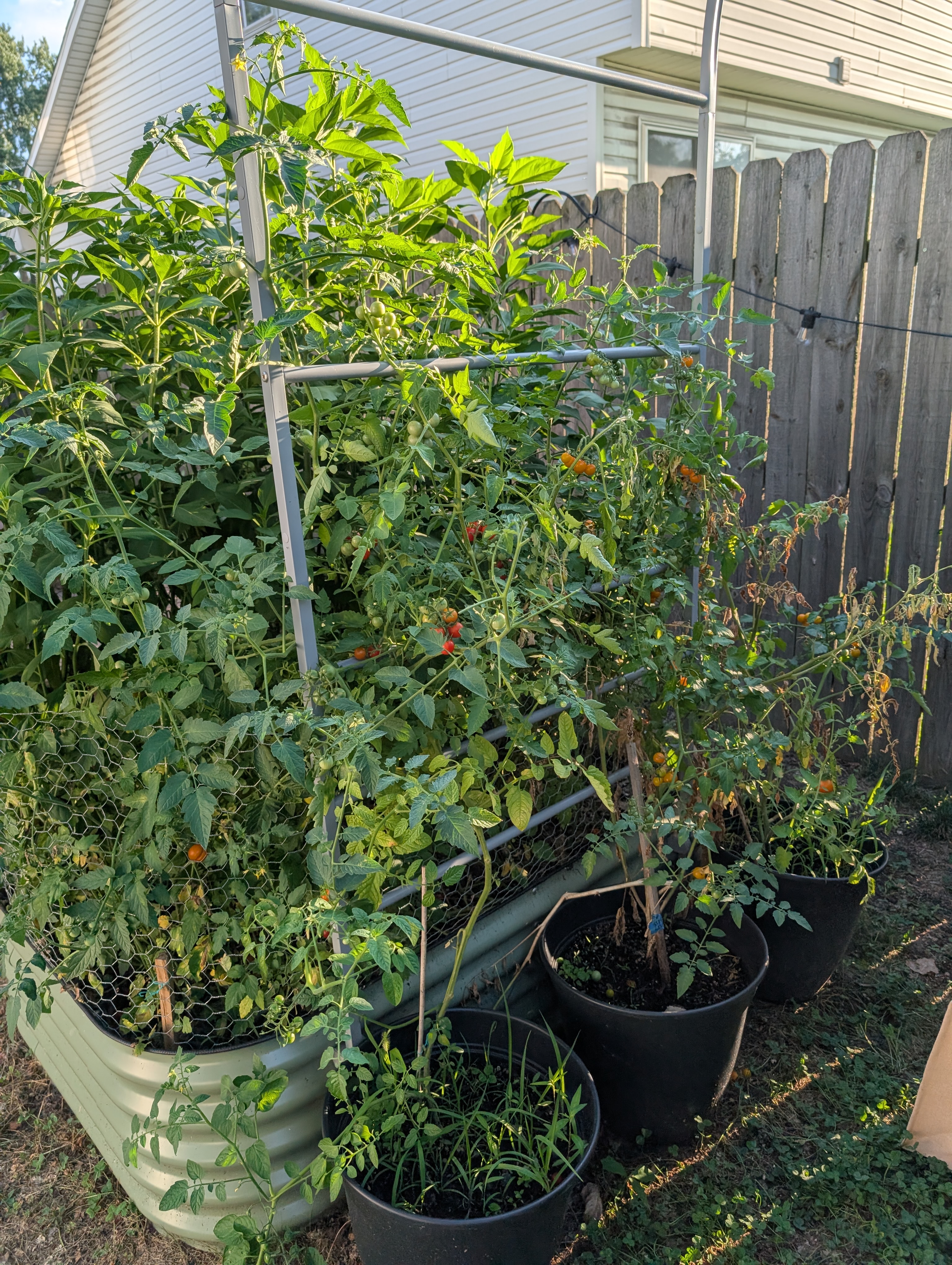
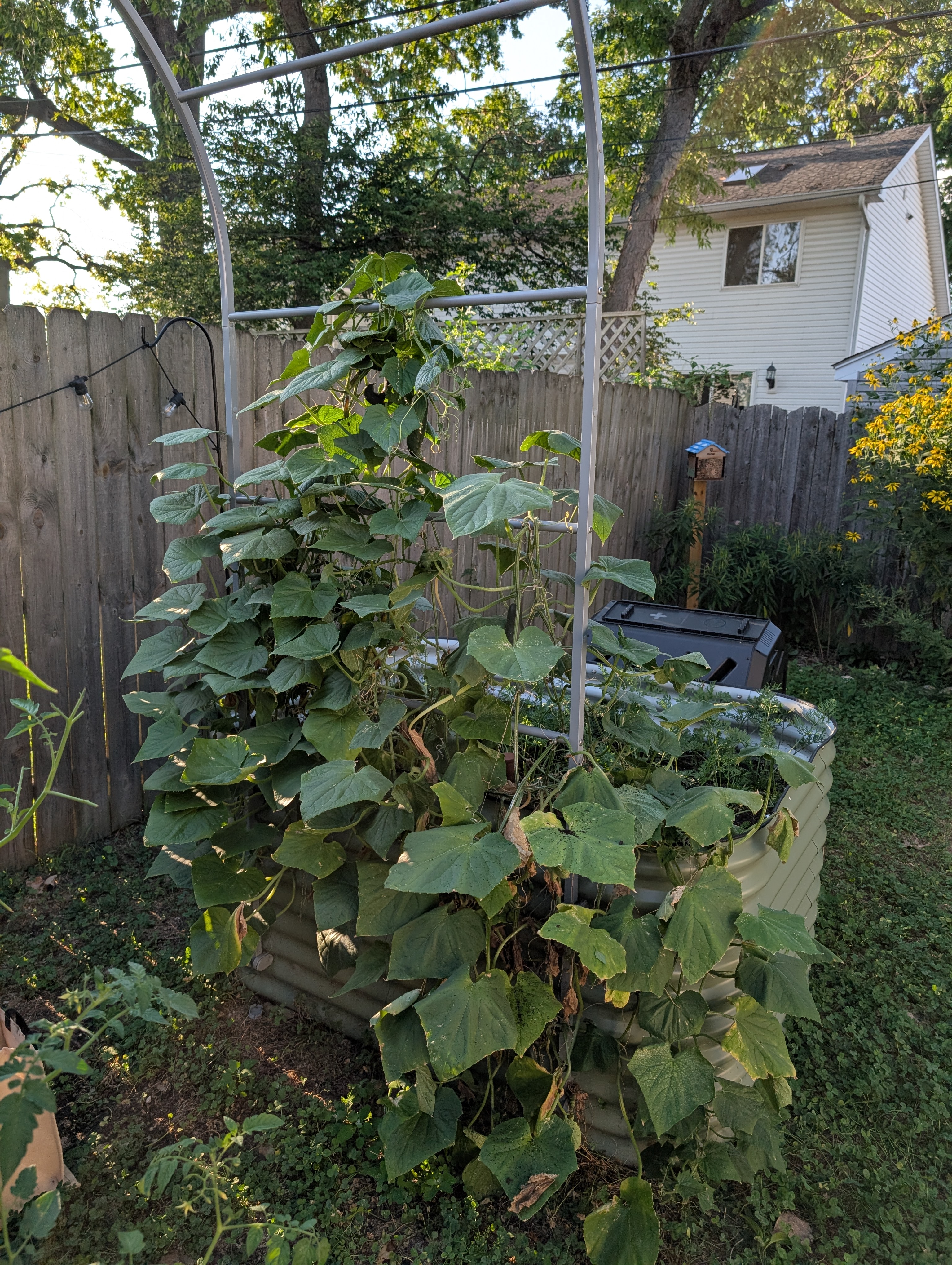
The tomatoes and cucumbers ended up being massive successes. We had a near-constant supply of fresh cucumbers and tomatoes all summer, and it never felt like we couldn’t find enough uses for them. Lots of great salads, and I became quite fond of a “greek chickpea bowl” type thing which was just chickpeas, red onions, cucumbers, and tomatoes over rice with tzatziki sauce. Delicious.
We did have some points where we were starting to drown in cucumbers, but people love cucumbers so it was pretty easy to offload them on friends and family.
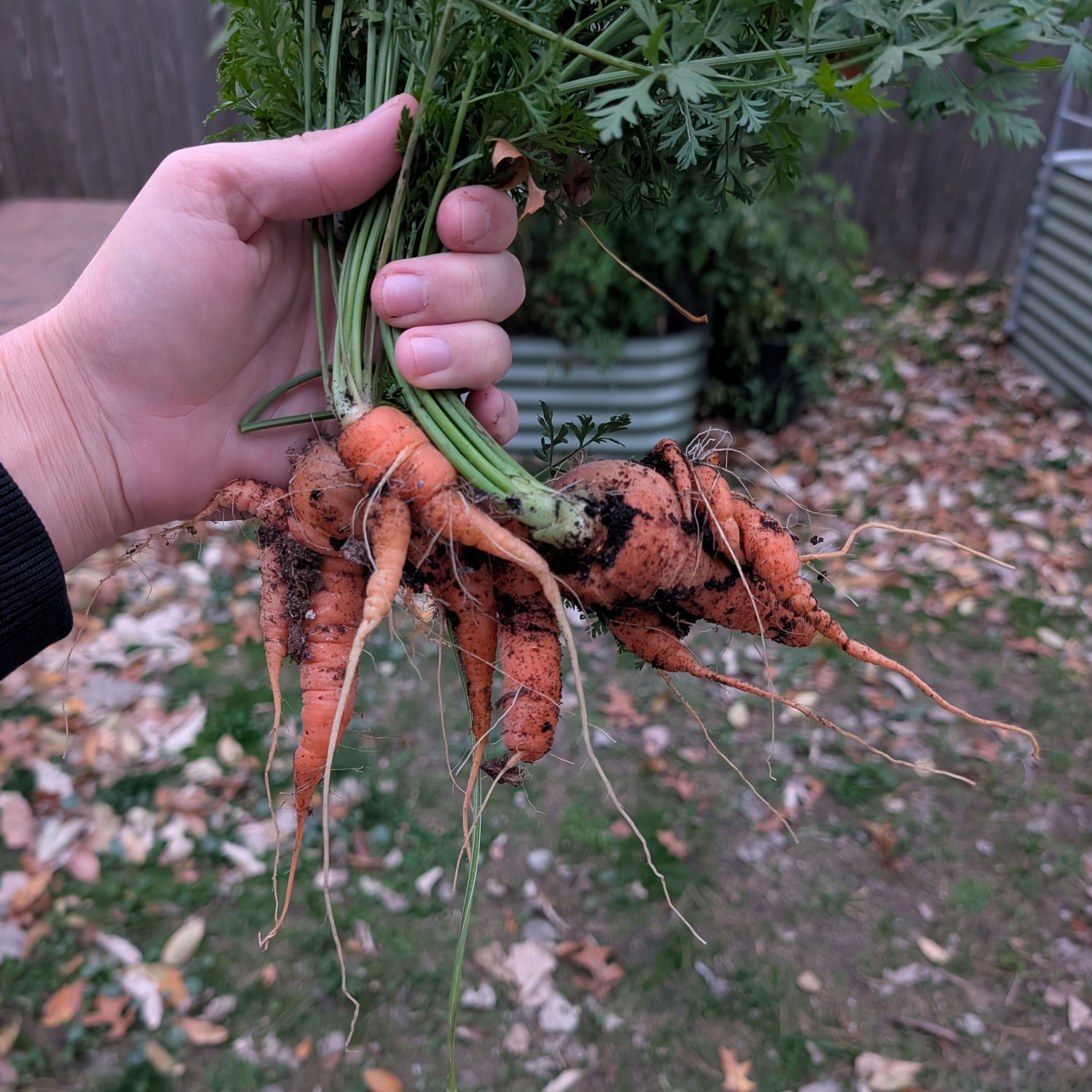
As for the carrots… We did use some! Nowhere close to all of them though. As it turns out, carrots don’t always grow as nicely as you see them in the store (or I may have messed something up, not going to rule that out); a lot of them came out short and knotty and kinda ugly, but they did still get the job done. The real problem is that we realized that most dishes that we like to use carrots in are things like soups and stews which don’t quite feel as appealing in the summer. I think the ideal setup is to harvest the carrots in the fall and store them in some way that allows them to stay good over the winter, but I’m not sure what that looks like right now.
I haven’t mentioned the fourth vegetable I grew in our vegetable garden yet… Jerusalem Artichoke. I had a dish which featured Jerusalem Artichoke at a restaurant the year prior and became fascinated by it. It’s a native plant which is very beneficial to pollinators, but it has edible tubers that taste kinda like a nutty potato and can basically be cooked the same ways a potato can.
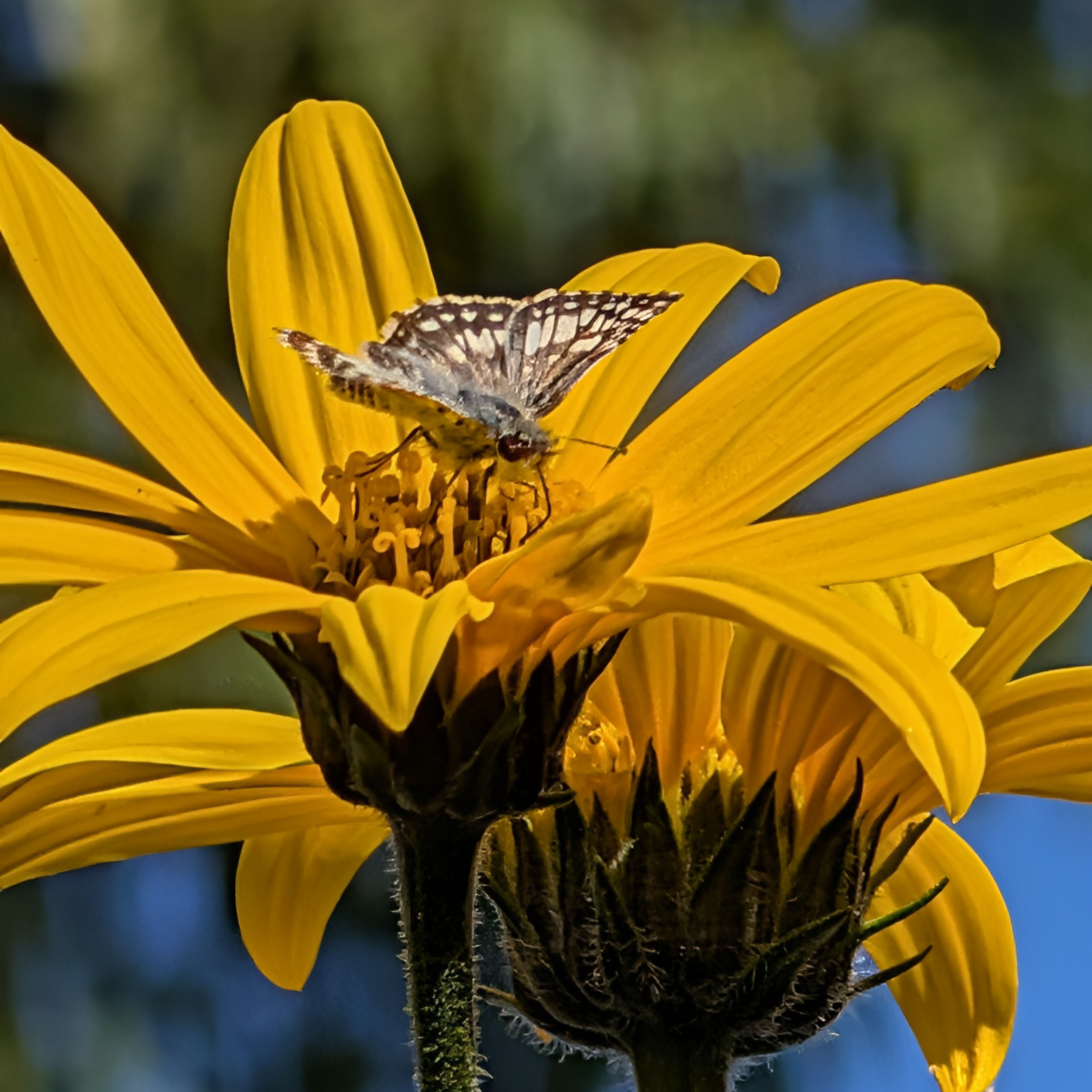
Here’s the thing… you’re supposed to wait to harvest them until after the first frost, but things got away from me and I just never harvested them. Now the ground is too frozen for me to dig them up, so I’m going to have to wait for a day this winter when things thaw out enough that I can run out there and grab some.
Even if they’re good, I think it was still a mistake to grow this because the ratio of how much space in my garden they took up to the number of times we’ll actually eat them is completely off. It was nice to grow them for the pollinators, but the raised garden beds are supposed to be the little patch that’s reserved for what us humans want to eat. I think next year I’m going to try replacing them with Jalapeños.
Wrapping Up
Whew, that was a lot! 2025 wasn’t a great year for much, but I had a great time with my plants at least. Here’s hoping that next year will be even better!